Newsletter Subscribe
Enter your email address below and subscribe to our newsletter

 ByAdmin
In modern industrial environments, efficiency and accuracy are paramount. From manufacturing floors to expansive warehouses, the ability to track assets, manage inventory, and oversee production processes in real-time is critical. Barcode scanning technology has long been a cornerstone of these operations, and its evolution to two-dimensional (2D) systems has unlocked new levels of productivity and data management capabilities.
Unlike traditional one-dimensional (1D) barcodes, which store limited information in a linear pattern, 2D barcodes hold significantly more data in a matrix format. This enhanced capacity allows them to store complex information such as website links, product details, and extensive text, making them ideal for the multifaceted demands of industrial applications. Understanding the technology behind 2D barcode scanning reveals why it has become indispensable.
A 2D barcode scanner functions differently from its 1D laser-based counterparts. It utilizes advanced imaging technology, much like a digital camera, to capture a complete picture of the barcode. This image is then processed by a sophisticated decoding algorithm that analyzes the pattern of squares and dots to translate it into usable data.
The decoding process is nearly instantaneous. The scanner captures the image, analyzes the pattern, decodes the stored information, and transmits it to a connected computer or mobile device. This entire sequence happens in a fraction of a second, enabling rapid data collection in fast-paced industrial settings such as assembly lines or shipping docks.
The adoption of 2D barcode scanning offers several distinct advantages in an industrial context. These benefits directly address the challenges of modern production, logistics, and warehouse management.
See also: Look out for karat square venturessilberlingtechcrunch
To meet the diverse needs of industry, 2D barcode scanners are available in several form factors, each tailored for specific tasks and work environments.
These scanners are installed in a stationary position, typically on conveyor belts, assembly lines, or at self-service kiosks. They automatically scan items as they pass through their field of view, enabling hands-free operation and high-speed data capture in automated production and sorting processes.
Handheld scanners are the most versatile and common type used in industrial settings. They offer workers the mobility to scan items in various locations, from warehouse shelves to shipping containers. Their ergonomic design makes them comfortable for prolonged use during tasks like inventory counts, order picking, and receiving.
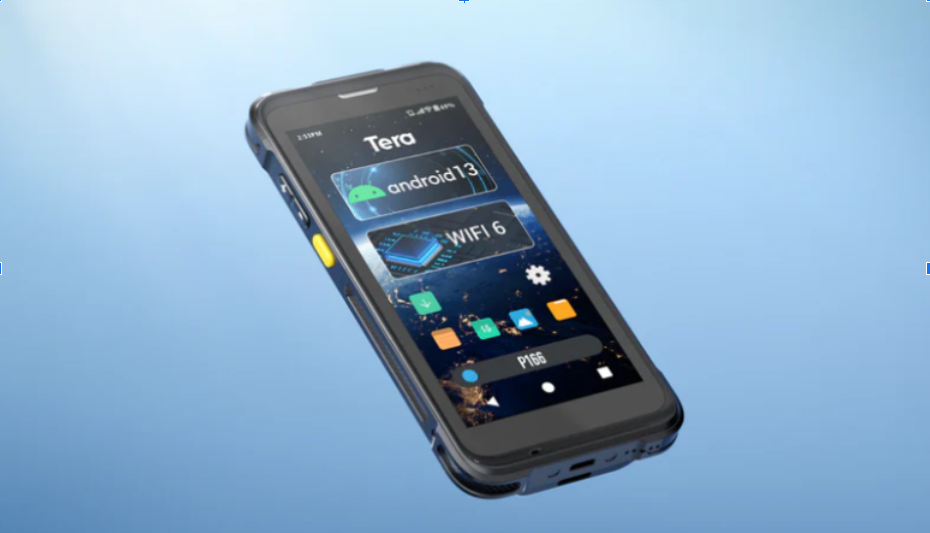
Mobile computers integrate barcode scanning capabilities into a ruggedized mobile device. These all-in-one tools are essential for on-the-go data management in logistics, field service, and large-scale inventory operations, allowing workers to not only scan but also process and transmit data in real-time.
Designed for maximum efficiency, wearable scanners are worn on the wrist or as a ring, leaving the operator’s hands free to handle packages or components. This form factor is ideal for high-volume scanning environments, such as sorting centers and order fulfillment warehouses, where speed and freedom of movement are critical.
The versatility of 2D barcode scanning makes it a transformative technology across numerous industrial sectors, where it streamlines complex processes and reduces human error.
In manufacturing, barcode scanners are used to track parts and components throughout the entire production lifecycle. This ensures that the correct parts are used in each assembly, provides complete traceability for quality control, and helps manage work-in-progress inventory accurately.
Warehouses rely heavily on barcode scanning for nearly every operation. Scanners are used to automate stock tracking, verify shipments, manage inventory levels with precision, and optimize the layout and flow of goods, leading to fewer errors and more efficient use of space.
For logistics and the broader supply chain, barcode scanning provides crucial visibility. It enables the tracking of goods from the point of origin to the final destination, ensures timely deliveries, and reduces errors in sorting and shipping, which is vital for maintaining a transparent and efficient supply chain. When selecting equipment for such critical tasks, opting for a robust device is essential. A reliable Tera barcode scanner is designed for durability and precision, making it well-suited for the rigorous demands of industrial use.
As industries continue to embrace automation and the Internet of Things (IoT), the role of 2D barcode scanners is set to expand. Future integrations will likely involve smarter systems that combine barcode data with other technologies like RFID for enhanced real-time tracking and analytics. The continued drive for efficiency and transparency ensures that advanced barcode scanning will remain a fundamental technology for industrial success.