
Newsletter Subscribe
Enter your email address below and subscribe to our newsletter

 ByAdmin
The healthcare industry faces constant pressure to improve efficiency, accuracy, and patient safety. Technology plays a crucial role in meeting these demands. One significant advancement is the use of Android barcode scanners, which are revolutionizing how healthcare professionals manage patient data, medications, and inventory.
Barcode technology uses scanners to read and process information encoded in barcodes. In healthcare, these barcodes are found on patient wristbands, medication packaging, and lab specimens. They store critical information for quick access, reducing the likelihood of human error.
Integrating with Healthcare Systems: The scanned data integrates directly into electronic health records (EHR) or inventory management systems. For example, scanning a patient’s wristband before medication administration ensures the correct drug and dosage are given.
Ensuring Accuracy and Reducing Errors: Automating data entry minimizes errors such as administering the wrong medication or mislabeling samples, enhancing patient safety and overall operations.
See also: What is financial union venturessilberlingtechcrunch
Barcode technology is essential for keeping patients safe by preventing errors and improving efficiency in several key areas:
Barcode technology simplifies the assembly of surgical tools by scanning each instrument against a count sheet. This ensures all instruments are accounted for and that expired ones are not used. This process enhances patient safety.
By utilizing barcode asset tracking software, healthcare facilities can trace each instrument from disinfection to patient use. This helps to provide a complete history of the instrument.
Many hospitals use barcoded wristbands to confirm patient identity, access medical records, and update information in real-time. This reduces errors and improves productivity.
Barcode systems confirm that the correct specimen container is used for required tests. This reduces labeling errors and ensures accurate lab processing.
By scanning barcodes, healthcare providers ensure that the correct blood type is given to the right patient. This significantly lowers the risk of transfusion errors.
Barcode systems enable real-time tracking of inventory levels. This helps manage repairs and ensures compliance.
Healthcare providers can track vaccine administration, monitor inventory, and ensure patients receive the correct vaccine by scanning barcodes on vaccine vials.
By scanning barcodes, healthcare providers can quickly access and update patient data, which improves record-keeping accuracy.
Barcode technology has become an integral part of many industries, with its significance in healthcare being particularly profound. Understanding how barcode scanning works allows healthcare professionals to appreciate its vital role in ensuring accuracy and safety in medical settings.
Barcode scanning reduces medication errors, a leading cause of preventable harm in hospitals. Verifying patient wristbands and medication packaging ensures the right patient receives the correct medication at the appropriate dosage and time.
Barcode technology streamlines healthcare operations, from admissions to inventory management. Instant data processing reduces manual data entry, allowing providers to focus on patient care.
By automating data entry and verification processes, barcode scanning reduces human errors. For instance, matching a specimen’s barcode to the correct patient eliminates mix-ups.
Barcode technology helps healthcare facilities maintain accurate records of medications, procedures, and patient interactions. This is essential for audits and regulatory compliance. It also enhances traceability, allowing providers to track medications or medical devices from procurement to administration.
Barcode technology enables real-time monitoring of stock levels, ensuring critical items are available when needed. This prevents shortages and reduces waste by quickly updating the system when an item is used, ordered, or restocked.
Barcode scanners automate entering patient information, medication details, and other critical data into electronic health records. This improves the accuracy of medical records, reducing the likelihood of mistakes and ensuring healthcare providers have reliable information available.
Alongside enhancing accuracy and safety, barcode scanners contribute to an improved overall patient experience. Patients gain greater confidence in their care, knowing that their treatment is precisely tracked and administered. Additionally, the efficiency gains from streamlined procedures free up healthcare providers to spend more time attending to patients’ needs.
Barcode technology offers substantial cost savings in the long term. These lower overall healthcare costs can then be reinvested into further enhancing patient care. Cost come from improved inventory management, reduced waste, fewer medication errors, and increased operational efficiency.
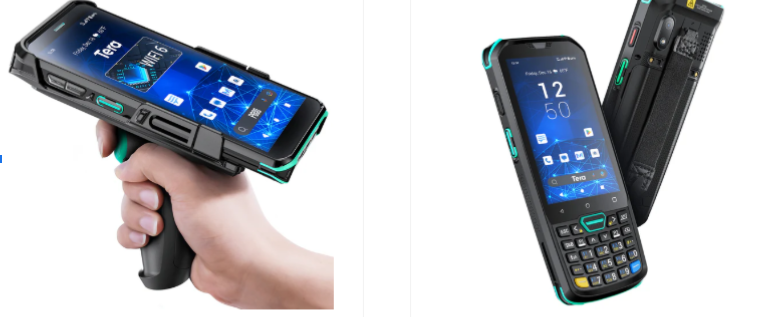
Modern barcode scanners are now commonly equipped with the Android operating system, offering enhanced functionality and integration capabilities.
In the ever-evolving landscape of medical technology, the role of barcode administration (BCMA) stands paramount in enhancing patient care. Despite its demonstrated capacity to prevent medication errors, its real-world application often brings about discrepancies in implementation. These discrepancies frequently lead to policy adaptations that, while intended to streamline processes, may inadvertently compromise the intended accuracy and patient safety standards. To navigate these challenges effectively, a deeper understanding nurses use barcode technology is crucial.
Medication barcode scanning solutions play an important role in a variety of settings. Solutions such as the 1D (Code 128) or 2D (Data Matrix) for medication packaging. These barcode symbologies contain drug name, dosage, lot number, expiration date, and National Drug Code (NDC).
Despite the efforts to standardize protocol, deviations occur regularly. Examples of typical deviations include failing to scan all medications or patient wristbands, technology-related problems such as low laptop battery or system interruptions, and environmental factors such as the placement of the medication room or the inadequate size of patient drawers. Causes for such deviations often stem from unclear or poorly described policies, health professionals unaware of policies or the policy was incompatible with workflow.
Hospitals need to thoroughly assess their procedures before introducing BCMA to ensure the technology is utilized. Implementing new changes with better scanner rates will ensure more standardized doses, for example pharmaceutical companies need to barcode medications on the primary packaging to combat the workload. It’s also key that hospitals invest in equipment and wireless scanners in order to provide better scanning rates. Ensuring more access will help BCMA reach it’s preventative effects.
In the quest for continuous improvement in healthcare, integrating android barcode scanners into existing systems represents a significant step toward mitigating risks and ensuring patient well-being. As we’ve seen, BCMA implementation isn’t just about incorporating technology; it’s fundamentally about reshaping the healthcare workflow, providing better patient care, and ensuring safety. By addressing the concerns and causes, healthcare facilities can optimize their practices, driving forward the promise of a safer future.
Android barcode scanners are vital to modern healthcare, improving patient safety, streamlining operations, and reducing costs. By incorporating these scanners, healthcare facilities can provide better care and a higher standard patient care.