Newsletter Subscribe
Enter your email address below and subscribe to our newsletter
Enter your email address below and subscribe to our newsletter

 ByOlivia
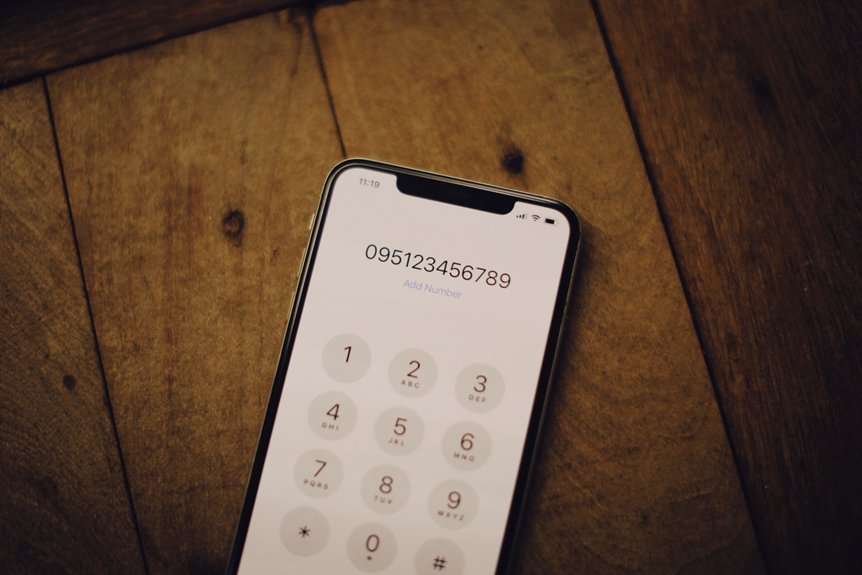
Phone identity records map who is contacted, when, and through which channels, forming visible networks and timing patterns. They reveal usage habits, contact frequencies, and potential relationships between numbers. Yet they omit content, intent, and many contextual details, leaving interpretation uncertain. Privacy, security, and policy concerns arise around data minimization, retention, and access controls. The balance between insight and intrusion requires careful governance and transparent safeguards to prevent harm; questions remain about scope and purpose beyond the surface signals.
Phone identity records summarize who a person communicates with, when, and through what channels, providing a traceable log of digital activity. These data traces reveal interaction networks, frequency, and timing, outlining caller patterns. They illuminate privacy gaps where routine communications may be inferred or exposed, underscoring the need for careful consideration of data governance and personal information protection.
How are calls, metadata, and usage patterns gathered, and what methods ensure data integrity across diverse networks? Data collection relies on call detail records, usage analytics, and network metadata within defined metadata scope. Privacy by design guides retention policies and retention timelines, while data minimization and anonymization techniques protect privacy. Practices include consent management, user consent, privacy controls, encryption standards, access audits, breach notification, regulatory compliance, geolocation limits, and data portability. Third party sharing, default settings, account recovery.
Despite their usefulness, records reveal only fragments of telecommunications activity. The limits and gaps reflect collection choices, retention periods, and jurisdictional constraints, not a complete view of behavior.
Analysts should recognize uncollected data, partial identifiers, and contextual missingness. This incompleteness shapes interpretation, risks misattribution, and underscores the need for transparency about what remains unrecorded or inaccessible: limits gaps, uncollected data.
The section examines how privacy, security, and policy intersect with phone identity records, highlighting practical risks, protections, and rights. It presents privacy tradeoffs and practical safeguards, emphasizing data minimization and proportional access. Rights clarification identifies who may access data and under what conditions, while the level of detail remains bounded. Clarity, caution, and freedom-minded framing guide balanced assessment.
Carrier subpoenas authorize production of records; metadata access is possible under legal process. The exact scope depends on jurisdiction, with courts balancing privacy and necessity, ensuring safeguards, notice, and limited retention by carriers.
Approximately 60% of observers cite restricted access to metadata without user consent; third parties may access limited metadata only under strict legal processes, raising privacy traps and consent gaps considerations. The standard remains cautious, privacy-focused, and policy-driven.
Deleted records leave traces as residual identifiers and truncated logs persist, revealing partial patterns. Data recovery and forensic analysis can reconstruct usage timelines, while privacy safeguards aim to minimize exposure, though gaps may still allow inferential inferences.
“Time reveals truth.” Encrypted communications affect visibility; encrypted metadata may still leak patterns. The subject notes privacy implications, as metadata can persist, guiding surveillance despite content secrecy, and urging cautious, freedom-respecting handling of traces and rights.
Data retention limits vary nationwide, with no uniform standard across all carriers. Privacy laws influence how long data is kept, while carrier access policies determine legal access windows and retention practices facing scrutiny and evolving safeguards.
Phone identity records illuminate contact networks and timing but offer only surface-level insight. They reveal who was contacted, when, and via which channels, while omitting content and full context. This can mislead if interpreted as a complete profile. Caution is essential: governance, minimization, and transparent retention are critical to prevent overreach. Some may object that such logs are necessary for security; however, careful policy safeguards and robust rights protections remain indispensable to balance safety with privacy.