
Newsletter Subscribe
Enter your email address below and subscribe to our newsletter

 ByJohn A
In today’s fast-paced digital world, data storage and quick file access are more important than ever. That’s where an external ssd drive comes in as a portable storage device that offers lightning-fast speeds, reliability, and convenience compared to traditional hard drives.
Whether you’re a gamer, content creator, or everyday user, an external SSD drive can help you store large files, back up important data, and transfer content in seconds. In this post, we’ll dive into what an external SSD drive is, how it works, and why it might be the perfect solution for your storage needs.
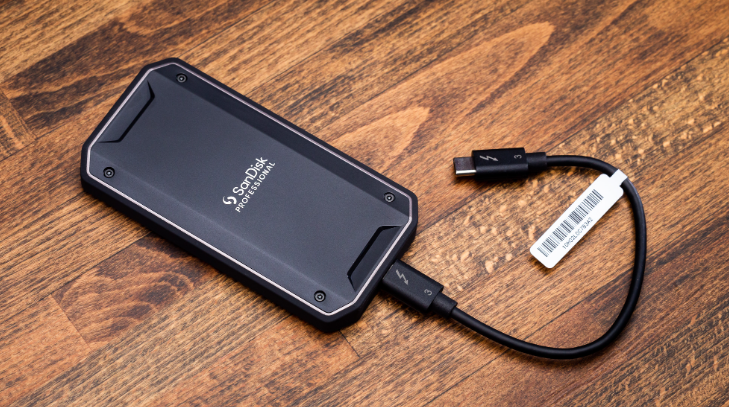
An external SSD is a solid-state drive that connects to your computer from the outside, usually via USB or Thunderbolt. It works like an internal SSD but isn’t installed inside your device. External SSDs are faster and more durable than traditional hard drives, and they’re portable, making it easy to store and transfer large files between computers.
External SSDs are fast, durable, and portable, making them a reliable solution for anyone who needs high-performance storage on the go.
External SSDs are much faster than traditional hard drives, up to 16 times quicker. For example, an external hard drive (HDD) transfers data at around 250 MB/s, while an external SSD using USB4 or Thunderbolt 3 can reach speeds of up to 4000 MB/s. This makes copying or opening large files like videos, games, or software almost instant, which is perfect for media professionals and gamers.
An external SSD frees up space on your laptop’s internal drive, helping it run faster and smoothly. You can also run programs directly from the SSD, which is especially helpful for handling large files, editing high-resolution images, or compiling demanding projects.
External SSDs are small and light, making them easy to carry in a bag, pocket, or jacket. They’re ideal for students, professionals, or photographers who need quick access to large files while traveling or working on the go.
SSDs are more durable than HDDs because they have no moving parts. They can withstand minor drops, shocks, and vibrations, making them a dependable option for users who travel or work in different locations.
See also: Wellhealthorganic.com:if-you-are-troubled-by-snoring-then-know
When choosing an external SSD, think about these main points:
Choose based on what you store:
The connection affects speed. USB 3.2 Gen2 is good for most users. Thunderbolt 3 is faster (up to 40 Gbps) but only works if your laptop has a Thunderbolt port. Check your laptop before buying.
Faster drives like Thunderbolt SSDs cost more. A 1TB USB 3.2 Gen2 SSD is a good balance of speed and price for most users. Professionals who need top speed can choose Thunderbolt SSDs.
Consider extras that suit your needs:
An external SSD enhances your laptop by providing faster, more efficient performance, not just extra storage. Here’s how it makes a difference:
An external SSD enhances your laptop’s speed, reliability, and portability, delivering smoother performance and faster access to your files.
Always use your laptop’s “Eject” option before unplugging the SSD. This ensures all data is saved properly and prevents file corruption or damage.
SSDs can only handle a certain number of writes before they start to wear out. To keep your drive lasting longer, avoid constantly saving or moving unimportant files.
Protect your SSD from direct sunlight and high temperatures. Make sure it has proper ventilation, as overheating can reduce performance and shorten the drive’s lifespan.
Regularly check for firmware updates from your SSD manufacturer and keep your laptop’s drivers up to date. These updates help improve performance, fix bugs, and ensure the SSD works smoothly with your system.
Keep your SSD efficient by deleting unnecessary files and leaving 10–20% of free space. This helps the drive run faster and reduces wear on its memory cells, extending its lifespan. Keep your SSD efficient by deleting unnecessary files and leaving 10–20% of free space. This helps the drive run faster and reduces wear on its memory cells, extending its lifespan.
Following these tips will help your external SSD stay fast, reliable, and long-lasting.