Newsletter Subscribe
Enter your email address below and subscribe to our newsletter


 ByJohn A
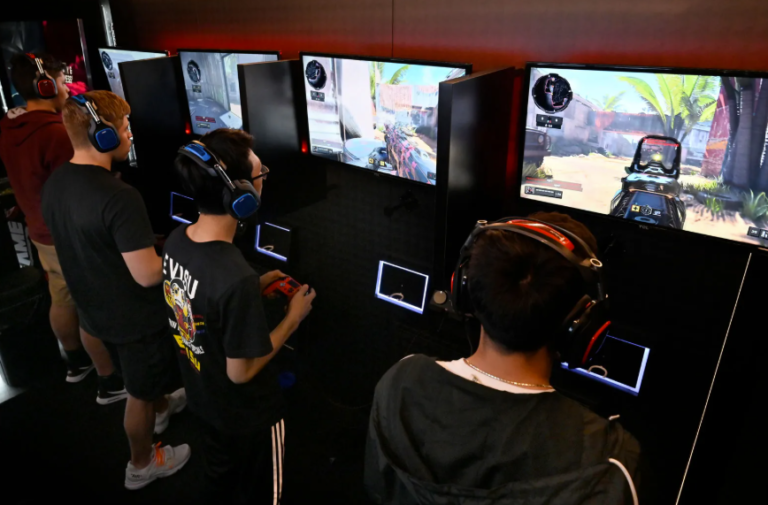
Online gaming has emerged as one of the most influential forms of entertainment in the digital world. With the expansion of internet connectivity, advanced mobile technology, and innovative software development, gaming has become more accessible to people across different regions. What once required specialized equipment can now be experienced through smartphones, computers, tablets, and various internet-connected devices.
The modern gaming industry offers much more than traditional gameplay. It combines interactive storytelling, competitive challenges, virtual exploration, creative activities, and social communication. Players can discover new experiences, connect with international communities, and participate in entertainment environments that continuously evolve through technological improvements.
As digital entertainment becomes increasingly integrated into everyday life, understanding the structure, benefits, innovations, and challenges of online gaming provides valuable insight into its growing influence.
Digital entertainment has experienced considerable development over the past several decades. Traditional games were generally designed for individual participation or local multiplayer experiences. However, the introduction of widespread internet connectivity created opportunities for more dynamic interaction.
Today, online gaming platforms can connect participants from different geographical locations through shared digital environments. Users can participate in collaborative missions, competitive matches, virtual adventures, and creative activities without needing to occupy the same physical space.
This transformation has expanded the possibilities of gaming while introducing new forms of communication and entertainment.
See also: Ensuring Home Comfort: The Role of a Residential Electrician in Ducted Heating Replacement
Early digital games commonly featured basic graphics, straightforward controls, and relatively limited functionality.
Modern games, by comparison, may incorporate expansive virtual environments, sophisticated character systems, detailed animations, and interactive storylines.
These improvements reflect advances in hardware capabilities, programming techniques, and creative game development.
Internet accessibility has helped online gaming become a global activity.
Players can now interact with individuals from different cultural backgrounds, exchange gameplay experiences, and participate in shared entertainment communities.
This connectivity has contributed to the development of gaming as both a recreational activity and a digital social experience.
The expanding digital entertainment industry has encouraged users to research different gaming platforms before interacting with them. Search engines contain numerous platform-related queries involving account systems, registration information, and website accessibility.
One example is kayutogel, a name associated with online togel and number-based gambling services. Related search terms include login kayutogel, daftar kayutogel, and link kayutogel, which generally refer to account access, registration information, and website addresses associated with that platform.
Understanding the context of these terms helps readers distinguish ordinary gaming services from platforms involving real-money gambling. When researching unfamiliar websites, users should evaluate their credibility, review privacy information, recognize potential financial risks, and consider the applicable laws in their location. Search engine visibility should never be treated as proof of a website’s safety or legal status.
Online gaming provides a broad collection of entertainment experiences designed for different audiences. Game categories vary in complexity, objectives, interaction styles, and technical requirements.
Multiplayer adventure games allow participants to explore shared virtual environments while interacting with other players.
These games frequently include missions, exploration activities, fictional characters, and cooperative challenges. Some offer expansive worlds where users can participate in continuously developing narratives.
Competitive games emphasize coordination, timing, strategic decisions, and performance.
Players may compete individually or participate in organized team-based matches. Certain titles also include ranking systems that reflect performance within their respective gaming environments.
Puzzle games encourage participants to analyze information, identify patterns, and solve challenges.
Their mechanics can range from relatively simple visual tasks to sophisticated logic-based activities requiring planning and concentration.
Simulation games recreate selected real-world processes within interactive digital environments.
Popular simulation concepts include managing fictional cities, operating virtual vehicles, developing businesses, and exploring imaginary ecosystems.
These experiences allow players to experiment with different decisions in controlled virtual settings.
Sandbox games provide flexible environments where participants can build, design, and experiment without necessarily following a fixed storyline.
Such games often emphasize imagination and user-generated experiences.
The success of a digital game depends on how effectively it combines entertaining mechanics with accessible technology.
Developers focus on multiple design elements to create experiences that encourage interaction and maintain user interest.
Gameplay mechanics define how participants interact with digital environments.
Responsive controls, understandable objectives, and balanced challenges help establish a consistent experience.
Well-designed mechanics also provide meaningful feedback when users complete tasks or make decisions.
Visual presentation contributes to the overall atmosphere of a game.
Some developers use realistic graphics to recreate detailed surroundings, while others adopt stylized artistic approaches that emphasize imagination and creativity.
Both approaches can provide engaging entertainment when supported by thoughtful design.
Background music, environmental sounds, and character audio can enhance a game’s interactive atmosphere.
Audio cues may also provide important gameplay information by indicating events, actions, or changes within a virtual environment.
Many online games receive periodic updates that introduce new features, improve performance, and address technical problems.
Ongoing development can support the long-term functionality of connected gaming environments.
Mobile technology has played an important role in making digital games accessible to broader audiences.
Smartphones provide convenient access to compatible gaming applications, allowing individuals to enjoy interactive experiences without relying exclusively on traditional gaming hardware.
The development of powerful mobile processors, improved touchscreens, and reliable internet connections has expanded the range of entertainment available through portable devices.
Mobile gaming enables individuals to access suitable entertainment during recreational breaks or while traveling.
Many casual games are designed around relatively short sessions, making them compatible with different daily schedules.
Unlike traditional desktop games, mobile titles frequently rely on touchscreen controls.
Developers adapt gameplay mechanics and interface layouts to accommodate smaller displays and touch-based navigation.
Modern smartphones can support increasingly sophisticated gaming experiences.
However, actual performance depends on device specifications, software optimization, internet quality, and the technical demands of individual games.
Online gaming has developed a strong social dimension through multiplayer environments and dedicated discussion communities.
Players frequently share information, exchange strategies, participate in collaborative activities, and discuss emerging developments.
These interactions have helped gaming culture expand beyond individual entertainment.
Cooperative games often require participants to exchange information and coordinate actions.
Effective communication can help teams organize objectives and respond to changing gameplay situations.
Online forums and gaming-related communities provide spaces where users can discuss technical issues, share experiences, and discover new entertainment options.
These environments can also support constructive feedback between players and developers.
Video platforms have introduced additional opportunities for gaming-related content.
Creators share gameplay recordings, educational tutorials, reviews, commentary, and live broadcasts with audiences interested in digital entertainment.
This has contributed to the development of a broader gaming media ecosystem.
Artificial intelligence is becoming increasingly significant in modern game development.
AI-related technologies can support various aspects of digital entertainment, from automated character behavior to more responsive gameplay systems.
Computer-controlled characters can use programmed decision-making systems to react to gameplay conditions.
These systems may create different behavioral patterns, making virtual environments more interactive.
Certain games include systems that adjust selected gameplay elements based on player performance.
Adaptive mechanics can help create experiences suited to different levels of familiarity and skill.
Developers may use automated tools to evaluate software behavior, identify technical errors, and examine specific gameplay scenarios.
Such technology can support development efficiency while allowing creative teams to focus on other aspects of game production.
Virtual reality is introducing new possibilities for immersive digital entertainment.
Through specialized equipment, users can experience simulated three-dimensional environments that respond to supported movements and interactions.
Unlike conventional gaming displays, VR systems can provide a stronger sense of presence within a virtual setting.
Augmented reality offers another approach by integrating digital elements into views of physical surroundings.
Although both technologies have different technical requirements, they demonstrate how interactive entertainment continues to evolve.
As gaming platforms increasingly rely on internet connectivity and user accounts, digital security has become an essential consideration.
Online services may process account credentials, communication records, device information, and other user-related data.
Responsible security practices help reduce the risk of unauthorized access and information misuse.
Using unique passwords is an important security measure.
Additional authentication methods, where available, can provide another layer of protection against unauthorized account access.
Imitation websites and misleading messages may attempt to obtain confidential information.
Users should carefully examine unfamiliar website addresses and avoid sharing verification codes or passwords with unknown parties.
Privacy policies can provide useful information about how digital services collect, store, and process personal data.
Understanding these policies helps individuals make more informed decisions about online participation.
Gaming can provide enjoyable recreational experiences, but maintaining balance is important.
Spending excessive time on digital entertainment may interfere with everyday responsibilities, sleep schedules, physical activity, and personal relationships.
Setting reasonable time boundaries and taking regular breaks can contribute to healthier participation.
Players should also understand that not every service described as online gaming operates in the same way.
Real-money gambling platforms involve financial risk and may be restricted or prohibited under applicable local laws. Outcomes involving chance cannot provide guaranteed winnings, and claims suggesting otherwise should be approached critically.
The gaming industry continues to explore technologies that could improve accessibility, performance, and interactive experiences.
Several developments are influencing the direction of digital entertainment.
Cloud gaming allows supported titles to operate through remote computing infrastructure.
This can reduce certain local hardware requirements, although service availability and reliable connectivity remain important.
Developers are increasingly considering features that accommodate different player needs.
Adjustable controls, subtitles, readable text, and customizable interface options can improve access to selected games.
Cross-platform functionality can allow compatible devices to participate in shared gaming experiences.
Such developments may provide greater flexibility for players using different types of hardware.
Improvements in software development, artificial intelligence, and immersive technologies are creating opportunities for new entertainment formats.
These innovations may continue to reshape the relationship between players and virtual environments.
Online gaming involves playing digital games through internet-connected systems. Depending on the title, users may participate individually or interact with other players.
Its popularity is influenced by accessibility, diverse entertainment categories, multiplayer features, and continuing technological improvements.
Online games may operate on smartphones, tablets, laptops, desktop computers, and compatible gaming consoles.
Common categories include adventure games, strategy games, puzzles, multiplayer competitions, simulations, and creative sandbox environments.
Mobile gaming generally emphasizes portability and touchscreen interaction, while computer gaming may offer different control methods and hardware capabilities.
Multiplayer environments allow participants to communicate, compete, and collaborate through shared digital experiences.
Artificial intelligence can support automated character interactions, adaptive mechanics, testing systems, and more dynamic virtual environments.
Cloud gaming uses remote computing systems to process compatible games and stream the resulting experience to connected devices.
Using strong passwords, enabling additional authentication, reviewing privacy settings, and avoiding suspicious links can help protect personal information.
Balanced participation helps individuals enjoy digital entertainment without allowing excessive gaming to interfere with other important activities.
Online gaming has become a significant part of contemporary entertainment by combining technological innovation, global connectivity, and interactive experiences. Its continued development has expanded the range of activities available through mobile devices, computers, and connected gaming systems.
From creative virtual environments and multiplayer adventures to technological advances in artificial intelligence and cloud gaming, the industry continues to introduce new possibilities for digital recreation.
Understanding online security, maintaining balanced entertainment habits, and recognizing the distinction between recreational gaming and gambling are essential aspects of informed participation. As technology progresses, the digital gaming landscape will continue to offer opportunities for creativity, communication, and interactive entertainment.